Marketing Platforms Compared: HubSpot vs Unbounce
HubSpot is an all-in-one inbound marketing, sales, and customer service platform designed to help businesses attract, engage, and delight customers. Let's delve into the key aspects that make HubSpot a popular choice among marketers:
- Inbound Marketing Excellence: HubSpot is renowned for its inbound marketing capabilities, emphasizing content creation, social media promotion, and lead nurturing. The platform provides a suite of tools to attract and convert leads organically.
- Integrated CRM: One standout feature is HubSpot's integrated Customer Relationship Management (CRM) system. This unified platform enables seamless tracking of customer interactions, making it easier to manage contacts, sales, and customer service in one place.
- Marketing Automation: HubSpot excels in marketing automation, allowing users to create personalized workflows, automate email campaigns, and tailor content based on user behavior. This automation streamlines marketing processes and enhances efficiency.
- Analytics and Reporting: Robust analytics and reporting tools empower users to measure the performance of their marketing efforts. From website analytics to campaign reports, HubSpot provides valuable insights to optimize strategies and improve results.
- Content Management System (CMS): HubSpot's CMS simplifies website management with features like drag-and-drop page editing, SEO optimization tools, and responsive design. This ensures a user-friendly experience for both marketers and website visitors.
- Social Media Management: HubSpot enables users to schedule, publish, and monitor social media content directly from the platform. The social media tools facilitate engagement, tracking, and analysis of social media performance.
HubSpot caters to businesses of all sizes, from small startups to large enterprises, providing a scalable solution that grows with your business. The platform's user-friendly interface and comprehensive set of features make it an attractive choice for those looking to streamline their marketing efforts under one roof.
HubSpot Key Features Overview
Feature
Description
Inbound Marketing
Attract, engage, and delight customers through content and targeted campaigns.
CRM Integration
Unified CRM system for effective contact and lead management.
Marketing Automation
Create automated workflows and personalized campaigns.
Analytics and Reporting
Comprehensive tools for tracking and measuring marketing performance.
Content Management System (CMS)
Intuitive website management with SEO optimization features.
Social Media Management
Schedule, publish, and analyze social media content within the platform.
Understanding Unbounce
Unbounce stands out as a powerful landing page builder designed to optimize conversion rates and simplify the creation of high-performing landing pages. Let's explore the distinctive features and functionalities that make Unbounce a valuable tool for marketers:
- Drag-and-Drop Builder: Unbounce's intuitive drag-and-drop builder allows users to create customized landing pages without the need for coding skills. This flexibility empowers marketers to design and test pages quickly.
- A/B Testing: A key strength of Unbounce is its robust A/B testing capabilities. Marketers can experiment with different page elements, headlines, and calls-to-action to identify the most effective combinations for maximizing conversions.
- Conversion-Centric Templates: Unbounce provides a variety of professionally designed templates, optimized for conversions. These templates cover diverse industries and use cases, giving marketers a head start in creating impactful landing pages.
- Dynamic Text Replacement: Personalization is a highlight of Unbounce, with the Dynamic Text Replacement feature. This allows marketers to tailor the content of their landing pages based on the keywords used in a visitor's search query, enhancing relevance and engagement.
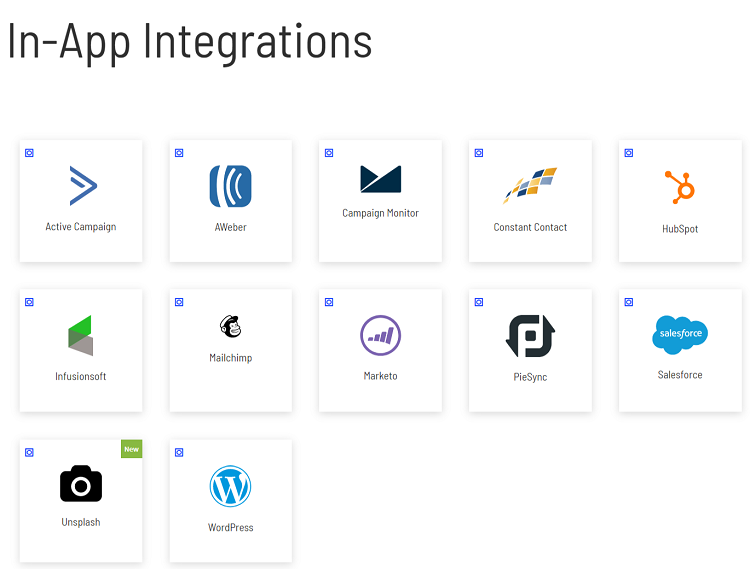
- Integration Capabilities: Unbounce seamlessly integrates with various marketing tools and platforms, facilitating the flow of data between systems. This includes CRM integration, email marketing, and analytics tools for a cohesive marketing strategy.
- Lead Generation Forms: Unbounce simplifies the process of capturing leads with customizable forms. Marketers can design forms to align with their brand, set up autoresponders, and manage leads efficiently within the platform.
Unbounce is particularly beneficial for businesses focusing on specific campaigns or promotions that require dedicated landing pages. Its emphasis on user-friendly design and powerful testing capabilities make it a go-to solution for optimizing the crucial step of converting visitors into leads or customers.
Unbounce Key Features Overview
Feature
Description
Drag-and-Drop Builder
Create customized landing pages without coding using an intuitive builder.
A/B Testing
Experiment with different page elements to optimize for maximum conversions.
Conversion-Centric Templates
Professionally designed templates optimized for high conversion rates.
Dynamic Text Replacement
Personalize landing page content based on the visitor's search query keywords.
Integration Capabilities
Seamless integration with various marketing tools and platforms.
Lead Generation Forms
Create customizable forms for efficient lead capture and management.
Key Features Comparison
When deciding between HubSpot and Unbounce, a thorough comparison of their key features is essential. Each platform offers unique strengths, catering to different aspects of the marketing process. Let's delve into a detailed comparison to help you make an informed choice:
- Lead Generation: HubSpot provides a comprehensive suite for lead generation, incorporating forms, landing pages, and robust CRM integration. Unbounce, on the other hand, excels in creating high-converting landing pages and streamlined lead capture through customizable forms.
- Marketing Automation: HubSpot is renowned for its advanced marketing automation capabilities, allowing users to create intricate workflows and nurture leads throughout the sales funnel. Unbounce focuses more on A/B testing and optimization for individual landing pages but lacks the depth of automation features found in HubSpot.
- CRM Integration: HubSpot's integrated CRM system is a standout feature, providing a unified platform for managing contacts, deals, and customer interactions. Unbounce integrates with various CRMs, ensuring a seamless flow of data, but it doesn't offer an integrated CRM system like HubSpot.
- Customization and Design: Unbounce shines in terms of landing page customization with its intuitive drag-and-drop builder and a wide range of templates. HubSpot, while offering customization options, may be perceived as more structured in terms of design, particularly with its CMS features.
- Analytics and Reporting: HubSpot provides comprehensive analytics tools covering various aspects of marketing performance. Unbounce, while offering detailed insights into individual landing pages through A/B testing results, may not match the depth of overall analytics provided by HubSpot.
- Dynamic Text Replacement: Unbounce takes the lead in personalization with its Dynamic Text Replacement feature, allowing marketers to tailor content based on the visitor's search query keywords. HubSpot also supports personalization but may not offer the same level of granularity.
Key Features Comparison
Key Feature
HubSpot
Unbounce
Lead Generation
Comprehensive suite with forms, landing pages, and CRM integration.
Focus on high-converting landing pages and customizable forms.
Marketing Automation
Advanced automation capabilities for intricate workflows.
Emphasis on A/B testing and optimization for individual landing pages.
CRM Integration
Integrated CRM system for unified contact and deal management.
Integration with various CRMs for seamless data flow.
Customization and Design
Structured design with customization options.
Intuitive drag-and-drop builder for highly customizable landing pages.
Analytics and Reporting
Comprehensive analytics covering various aspects of marketing performance.
Detailed insights into individual landing pages through A/B testing.
Dynamic Text Replacement
Supports personalization but may not offer the same granularity.
Dynamic Text Replacement for personalized content based on search queries.
Use Cases and Industries
Understanding the specific use cases and industries where HubSpot and Unbounce excel is crucial for aligning your marketing strategies with the strengths of each platform. Let's explore the scenarios in which these platforms shine:
-
HubSpot Use Cases:
- Inbound Marketing Strategies: HubSpot is particularly effective for businesses focusing on inbound marketing strategies, where content creation, SEO, and lead nurturing play a vital role in attracting and converting customers.
- Full-Stack Marketing Platform: HubSpot's comprehensive suite of tools makes it an ideal choice for businesses seeking an all-in-one solution for marketing, sales, and customer service, offering seamless integration and workflow automation.
- Enterprise-level CRM: Businesses requiring a powerful CRM integrated with marketing efforts will find HubSpot beneficial, especially for managing large volumes of customer data and interactions.
-
Unbounce Use Cases:
- Landing Page Optimization: Unbounce excels in scenarios where the primary focus is on creating and optimizing high-converting landing pages. This makes it ideal for campaigns, promotions, and specific product launches.
- A/B Testing and Iteration: Marketers looking to extensively A/B test and iterate on individual landing pages will find Unbounce valuable, as its features are geared towards fine-tuning page elements for maximum conversion rates.
- Personalized Campaigns: Unbounce's Dynamic Text Replacement feature makes it a preferred choice for businesses aiming to deliver personalized content based on user behavior and search queries, enhancing engagement.
Industries and Platform Suitability
Industry
HubSpot
Unbounce
eCommerce
Effective for managing the entire customer journey with integrated marketing and sales.
Optimal for creating dedicated landing pages for product launches and promotions.
SaaS
Well-suited for SaaS companies seeking comprehensive CRM integration and automation.
Ideal for A/B testing and optimizing landing pages for subscription sign-ups.
Professional Services
Beneficial for managing leads and nurturing relationships through personalized content.
Effective for creating service-specific landing pages with a focus on conversion optimization.
Healthcare
Useful for healthcare organizations with diverse marketing needs, from patient acquisition to engagement.
Valuable for creating targeted landing pages for health-related campaigns and services.
User Experience and Interface
The user experience (UX) and interface of marketing platforms play a crucial role in ensuring efficiency and satisfaction for users. Let's delve into the user experience and interface of both HubSpot and Unbounce to understand how they cater to the needs of marketers:
-
HubSpot User Experience:
- Unified Dashboard: HubSpot offers a unified dashboard that provides a holistic view of marketing, sales, and service activities. This centralized approach streamlines navigation and ensures that users can easily access the tools they need.
- Intuitive Navigation: The platform is designed with user-friendly navigation, making it easy for marketers to move between modules such as contacts, analytics, campaigns, and more. The intuitive layout contributes to a smooth workflow.
- Collaboration Capabilities: HubSpot fosters collaboration among team members with features like shared dashboards and activity feeds. This enhances communication and ensures that everyone is on the same page regarding ongoing campaigns and leads.
- Learning Resources: HubSpot provides extensive learning resources, including documentation, tutorials, and a community forum. This support ecosystem contributes to a positive user experience for both new and experienced users.
-
Unbounce User Experience:
- Intuitive Page Builder: Unbounce's drag-and-drop page builder offers an intuitive interface, allowing marketers to create and customize landing pages effortlessly. The simplicity of the builder contributes to a seamless user experience.
- A/B Testing Workflow: Unbounce streamlines the A/B testing process, making it easy for marketers to experiment with different elements on landing pages. The clear workflow ensures that users can optimize their pages for better conversion rates.
- Template Library: Unbounce provides a diverse template library catering to various industries and campaign types. The availability of professionally designed templates enhances the user experience by offering a starting point for landing page creation.
- Responsive Design: The platform prioritizes responsive design, ensuring that landing pages look and perform well across devices. This commitment to mobile responsiveness contributes to a positive user experience for visitors interacting with the pages.
Comparison of User Experience and Interface
Aspect
HubSpot
Unbounce
Dashboard
Unified dashboard for a holistic view of marketing, sales, and service.
Intuitive page builder as the central interface for landing page creation.
Navigation
User-friendly navigation with easy access to modules like contacts and analytics.
Clear and intuitive workflow for A/B testing and template selection.
Collaboration
Collaboration features such as shared dashboards and activity feeds.
N/A (Focused on individual landing page creation).
Learning Resources
Extensive learning resources, including documentation, tutorials, and a community forum.
N/A (Emphasizes simplicity and ease of use in the page building process).
Both HubSpot and Unbounce prioritize user-friendly interfaces, but their focuses differ based on the nature of the tasks they cater to. HubSpot excels in providing a centralized hub for various marketing activities, while Unbounce prioritizes a seamless and straightforward process for creating high-converting landing pages. The choice between the two will depend on the specific needs and preferences of the user.
Pricing Models
Understanding the pricing models of marketing platforms is essential for businesses to align their budget with the features and capabilities they require. Let's explore the pricing structures of HubSpot and Unbounce to determine which platform offers the best value for your marketing investment:
-
HubSpot Pricing:
- Freemium Model: HubSpot offers a freemium model, allowing users to access essential marketing and CRM tools for free. This is an excellent option for small businesses and startups looking to get started with basic features at no cost.
- Tiered Plans: HubSpot's paid plans are tiered, catering to businesses of different sizes and needs. The plans include Marketing Hub, Sales Hub, Service Hub, and a comprehensive CRM suite. Each tier offers additional features, integrations, and user seats.
- All-in-One Platform: HubSpot's pricing is often praised for providing an all-in-one platform, eliminating the need for multiple subscriptions. This can result in cost savings and streamlined management for businesses looking for a unified solution.
- Scaling Options: HubSpot's pricing allows businesses to scale their subscription based on the growth of their marketing and sales needs. This scalability makes it suitable for both small businesses and large enterprises.
-
Unbounce Pricing:
- Subscription Plans: Unbounce operates on a subscription-based pricing model, offering Essential, Premium, and Enterprise plans. Each plan includes a different set of features, with higher-tier plans providing more advanced functionalities.
- Landing Page Quotas: Unbounce's pricing is based on the number of landing pages and unique visitors. This transparent model allows businesses to choose a plan that aligns with their specific campaign requirements and expected traffic.
- Conversion Intelligence: Higher-tier plans of Unbounce include features like Smart Traffic, which uses AI to dynamically route visitors to the most relevant variation of a landing page. This innovative feature is designed to improve conversion rates over time.
- Custom Plans: Unbounce also offers custom plans for businesses with unique needs, allowing for personalized pricing based on specific requirements and usage.
Comparison of Pricing Models
Aspect
HubSpot
Unbounce
Model
Freemium model with tiered plans.
Subscription-based pricing with Essential, Premium, and Enterprise plans.
Features
Comprehensive all-in-one platform with marketing, sales, and service hubs.
Focus on landing page creation and optimization with additional features in higher-tier plans.
https://fiverrpromotion.net/blog/marketing-platforms-compared-hubspot-vs-unbounce/
Comments
Post a Comment